
Alfalfa
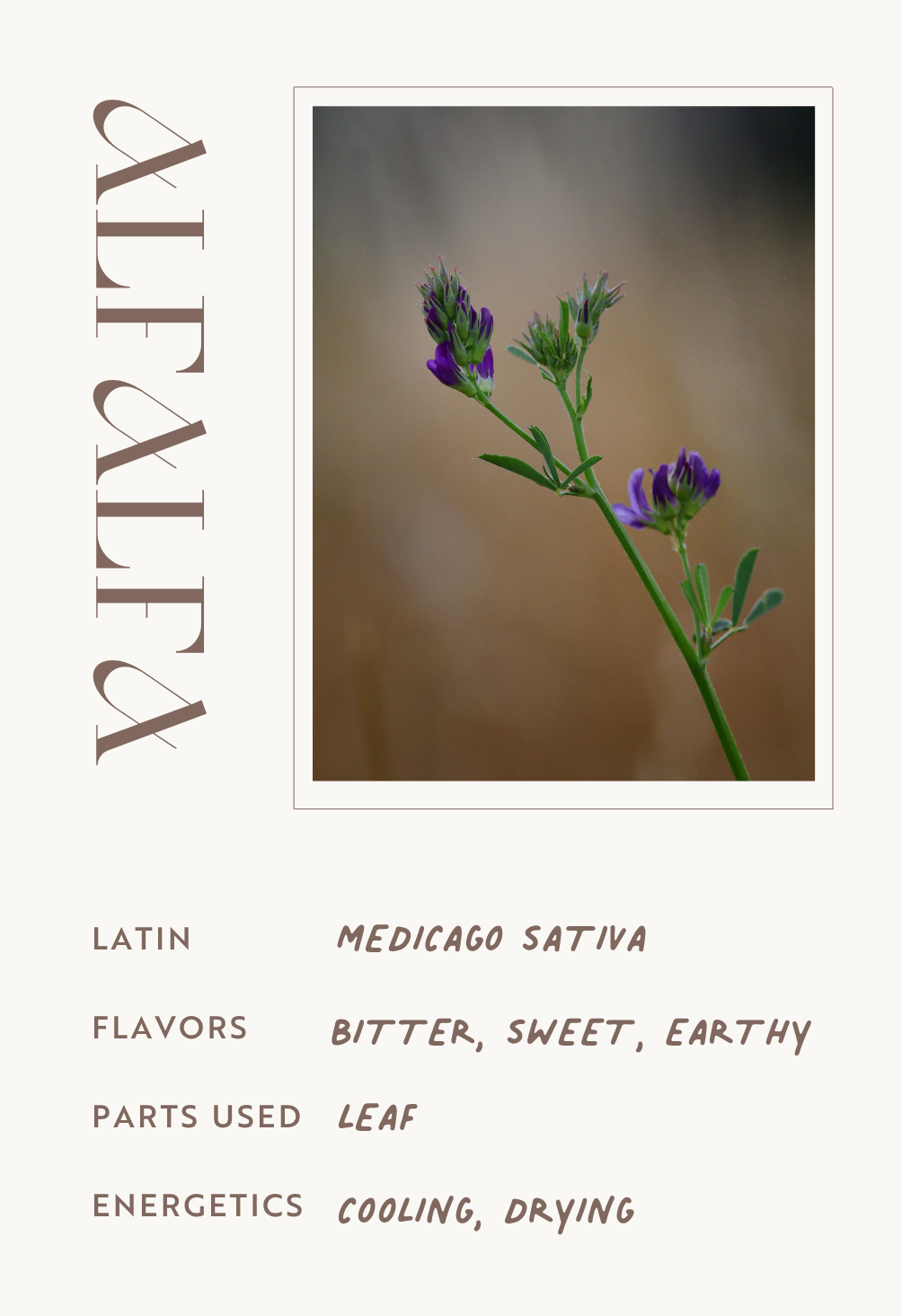
Latin: Medicago Sativa
Parts used: Leaves
Flavors: Bitter, sweet, earthy
Energetics: Cooling, drying
Actions: Nutritive, phytoestrogenic, galactagogue, antirheumatic, diuretic
Affinities: Digestive system, endocrine system, kidneys, bones, joints
Alfalfa is a perennial green flowering plant that belongs to the legume family. It has traditionally been prized in herbalism as a nutrient-dense general tonic and reconstructive herb, containing one of the highest mineral profiles of any land plant. Alfalfa contains vitamins A, B-complex, C, E, K, and U, and minerals like calcium, magnesium, potassium, iron, and phosphorus, making it one of the best herbs to combat fatigue, malnutrition, and recovery from illness. It’s high calcium and mineral content makes it a staple in herbal formulas targeting osteoporosis or connective tissue weakness. Additionally, it contains mild phytoestrogens and can be used to support menopausal symptoms like hot flashes, reproductive health, and lactation.
