
Ginger
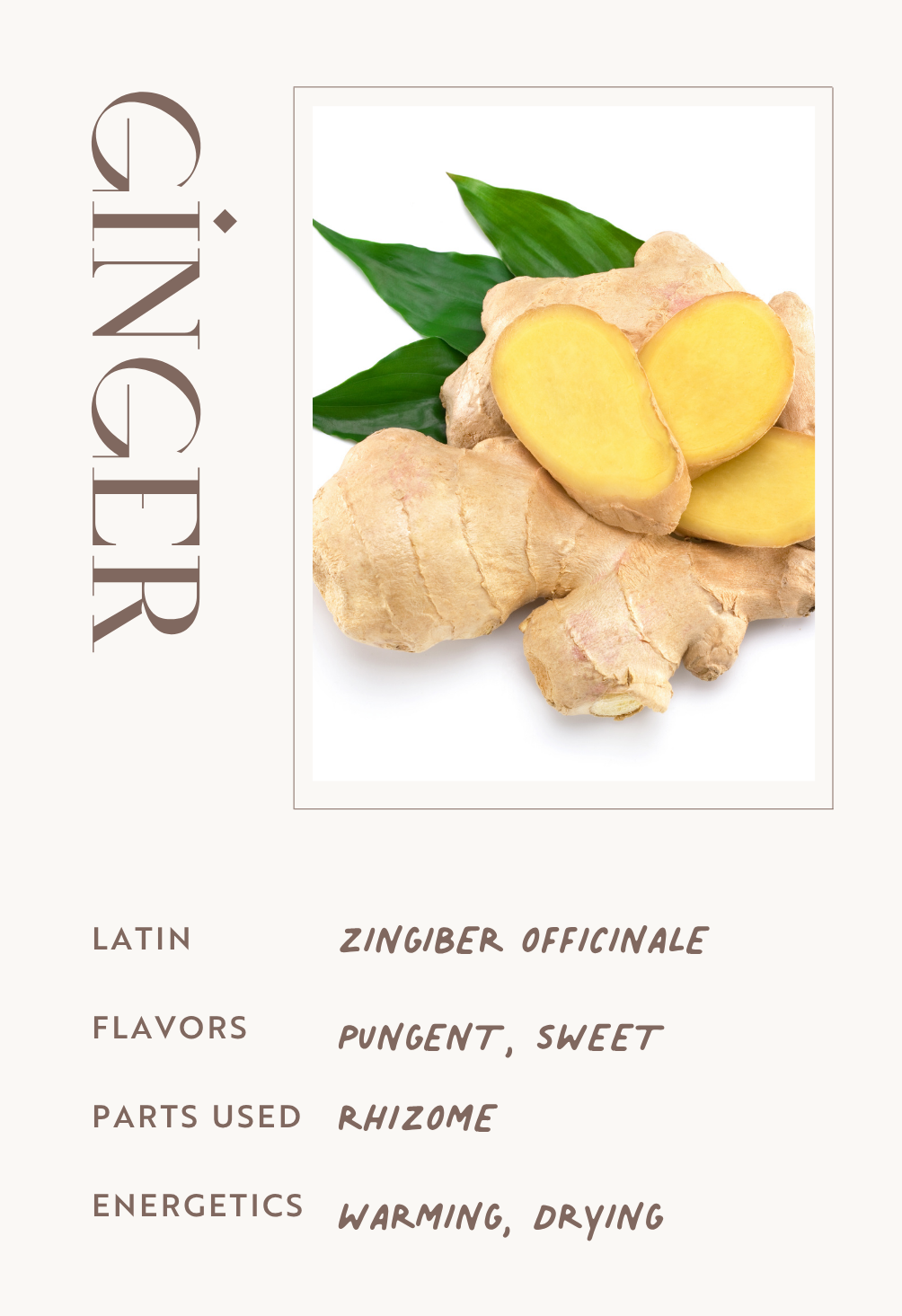
Latin: Zingiber Officinale
Parts used: Rhizome
Flavors: Pungent, sweet
Energetics: Warming, drying
Actions: circulatory stimulant, carminative, antispasmodic
Affinities: Digestive system, respiratory system, reproductive system
Ginger root is a staple in western herbalism and has been used for centuries to treat various medical ailments, most commonly digestive disturbances and nausea. As a warming digestive tonic, ginger promotes gastric secretions, relieving gas, bloating, and colic. It is widely utilized to prevent and ease motion sickness, seasickness, morning sickness during pregnancy, and post-operative or chemotherapy-induced nausea. As a circulatory stimulant, ginger warms the extremities by driving blood to the surface of the body, and supports peripheral circulation.
Additionally, ginger contains anti-inflammatory compounds that help ease inflammation in the musculoskeletal system (bones, joints, muscles), as well as immune supportive properties. As an antispasmodic, ginger supports the relaxation of smooth muscle spasms, providing relief from cramping and menstrual pain.
